progress_activityLoading...
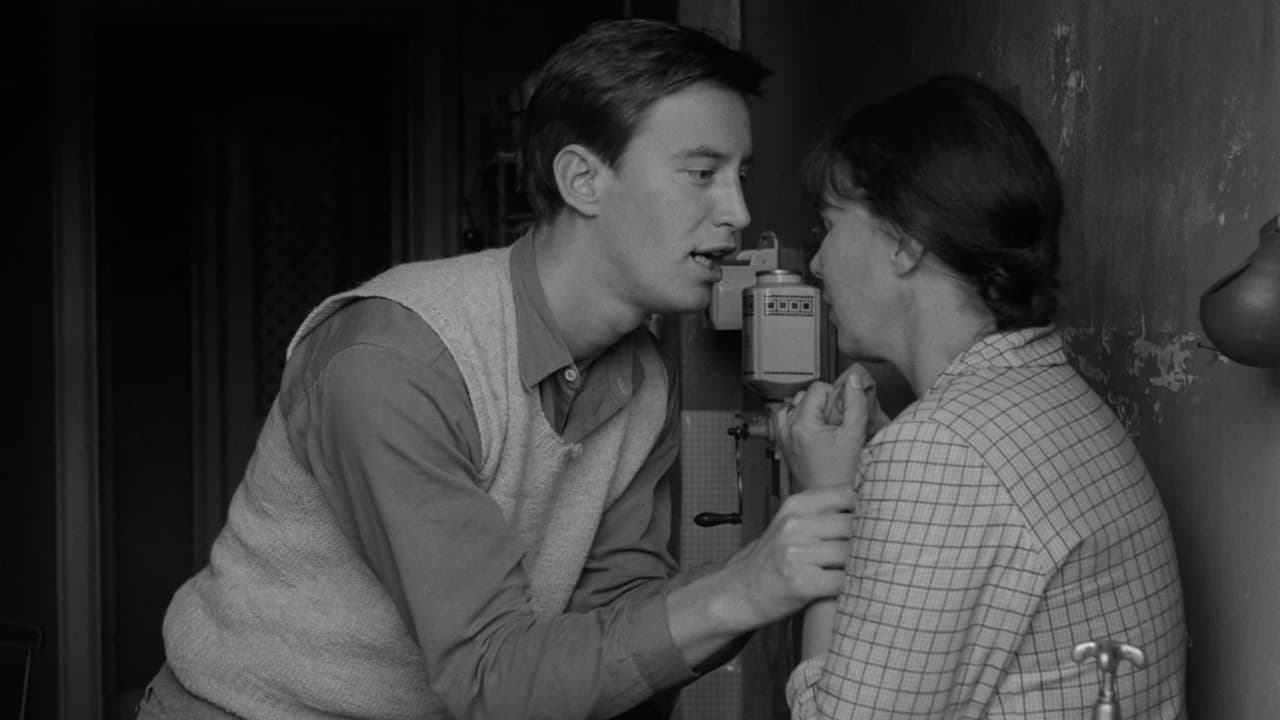
196397 minsDrama
★7.0/10
Raven's End
In 1936, aspiring writer Anders, along with his friend Sixten, is desperate to escape his working-class upbringing. Anders' father is an unemployed alcoholic and his mother slaves away at a laundry to support the family. A ray of hope comes Anders' way when he finishes his first novel and submits it to a publisher. But after his girlfriend gets pregnant, his future dims before his eyes once more.
Synopsis
In 1936, aspiring writer Anders, along with his friend Sixten, is desperate to escape his working-class upbringing. Anders' father is an unemployed alcoholic and his mother slaves away at a laundry to support the family. A ray of hope comes Anders' way when he finishes his first novel and submits it to a publisher. But after his girlfriend gets pregnant, his future dims before his eyes once more.
Reviews
G
CinemaSerf7/10
Aug 9, 2026I know that we Brits were always fond of a gritty, kitchen-sink, style of dysfunctional family drama, but I wasn't aware that the Swedes were of a similar mind. This rather grim feature follows the life "Anders" (Thommy Berggren), a disillusioned would-be writer who hopes that his wordsmithery will offer him and girlfriend "Elsie" (Christina Frambäck) a route out of their 1930s Malmö concrete jungle. For the moment, though, the publishers aren't biting his hands off and so he must reside with his unemplyably alcoholic dad (Keve Hjelm) and his downtrodden mother (Emy Storm) who tries her best to keep the family afloat by working at a local laundry. Things don't exactly become more promising for him when he discovers that he is to be a father and with creative rejection lying heavy upon him, you do have to wonder if this apple hasn't fallen very far from the boozing tree. On the face of it, this isn't a very uplifting drama and to be honest, I thought "Anders" to be rather a selfish young man inclined to use people as it suited him, despite watching the effect such behaviour has had on a mother with whom he shares a close bond. His father, frequently, makes it clear that he couldn't care less about his son - but that doesn't look like any great loss, either - it all seems to be going around in it's own vicious circle. It's probably his treatment of "Elsie" that finally convinced me that "Anders" wasn't worthy of my pity or sympathy and that's when I began to appreciate more the skills of Berggren in creating something rudderless and self-obsessed. As the story reaches it's final stages, we learn a little of what caused his father to take to the gin, and that allows both Hjelm and a really quite affecting Storm to take their spot centre-screen with two entirely different - but connected - cries for help of their own. It's interesting that psychologists the world over never predicted that shoving human beings into grey concrete housing estates and expecting them to thrive was a shocker of an idea, but had they seen the gray and drab surroundings rather brutally photographed here, they might have thought twice. That is possibly best exemplified by what amounts to a trip to a science fair - only instead it's a trip to the mall to see the new electric escalator! All of this said, though, there is still an abiding sense of community here. Perhaps that's what wrong and what perpetuates their subliminal (or abject) misery and their acceptance of it? In any case, there are four contrasting yet remarkably similar characterisations here presenting us with something akin to an uncomfortable fly-on-the-wall story that is well worth a look.




Watch Online
Technical Specs
Release Date1963-12-25
Runtime97 MIN
Rating7.0/10
StatusReleased
Languages
Swedish
Created By
Europa Film
Hashtags
#aspiring writer#malmö#1930s#teenage protagonist
You Might Also Like
Selected by The Digital Curator for your profile.